Current Research Projects
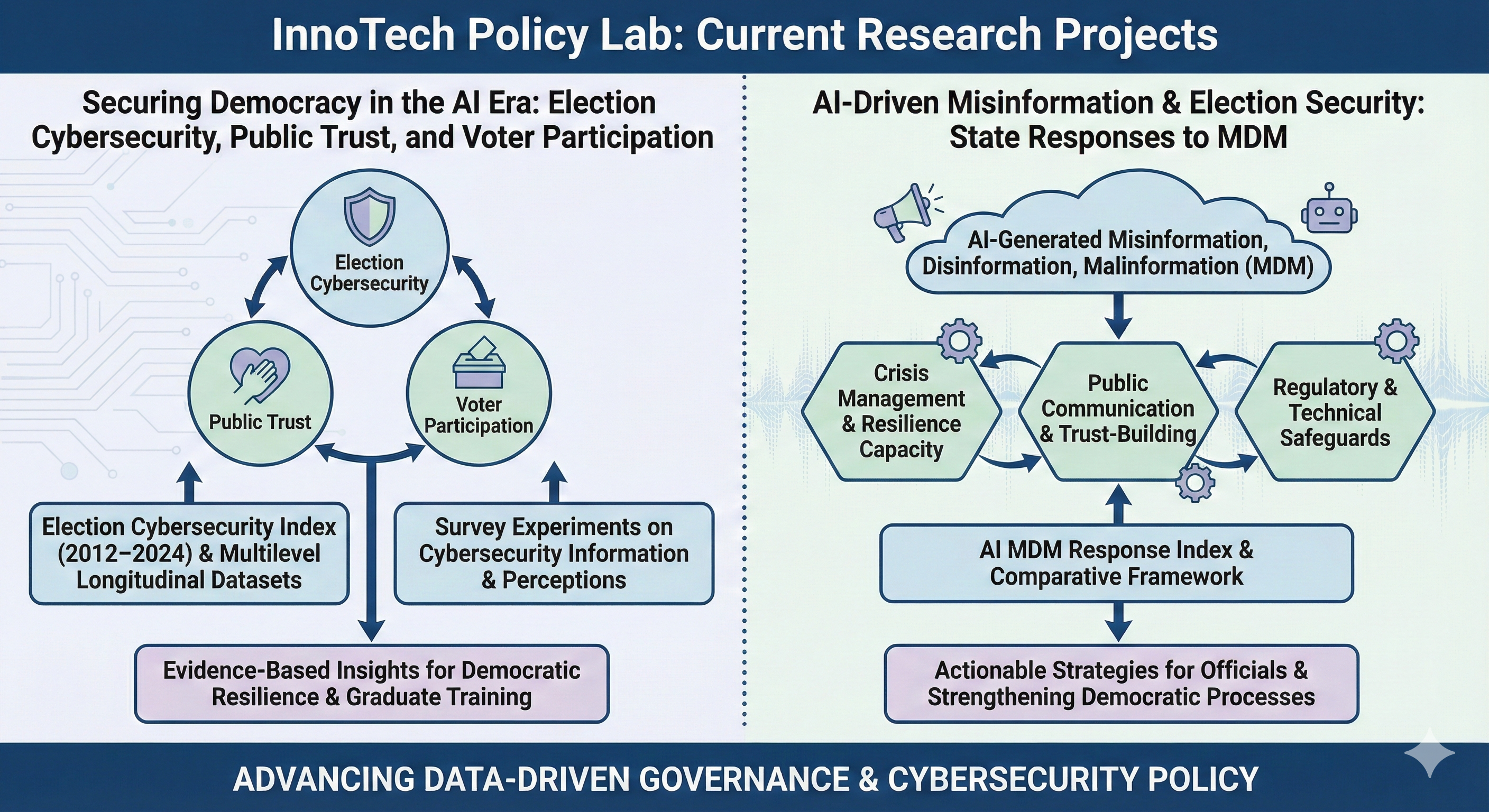
Securing Democracy in the AI Era: Election Cybersecurity, Public Trust, and Voter Participation
The InnoTech Policy Lab investigates how election cybersecurity, public trust, and voter participation interact in an era shaped by rapidly advancing artificial intelligence. This project develops a national Election Cybersecurity Index (2012–2024), constructs multilevel longitudinal datasets to analyze how cybersecurity maturity influences voter registration and turnout, and conducts survey experiments to measure how information about cybersecurity protections affects trust and perceptions of election integrity. Through interdisciplinary methods—integrating national datasets, qualitative coding, and AI-supported analytics—the Lab produces evidence-based insights that strengthen democratic resilience while advancing graduate training in data-driven governance, cybersecurity policy, and AI-informed public decision-making.
AI-Driven Misinformation & Election Security
This project examines how U.S. state governments respond to AI-generated misinformation, disinformation, and malinformation (MDM) targeting elections. The Lab systematically analyzes state-level policies, public communication strategies, crisis-response mechanisms, and regulatory/technical safeguards designed to counter misleading election-related content, including synthetic media and fraudulent election websites. Using AI-assisted data collection, careful manual validation, and mixed-methods analysis, the Lab is developing the AI MDM Response Index—a comparative framework evaluating state efforts across:
- Crisis Management & Resilience Capacity
- Public Communication & Trust-Building
- Regulatory & Technical Safeguards
This project offers election officials evidence-based insights, comparative benchmarks, and actionable strategies to protect public trust and strengthen democratic processes in the age of AI.
Research Projects Under Development
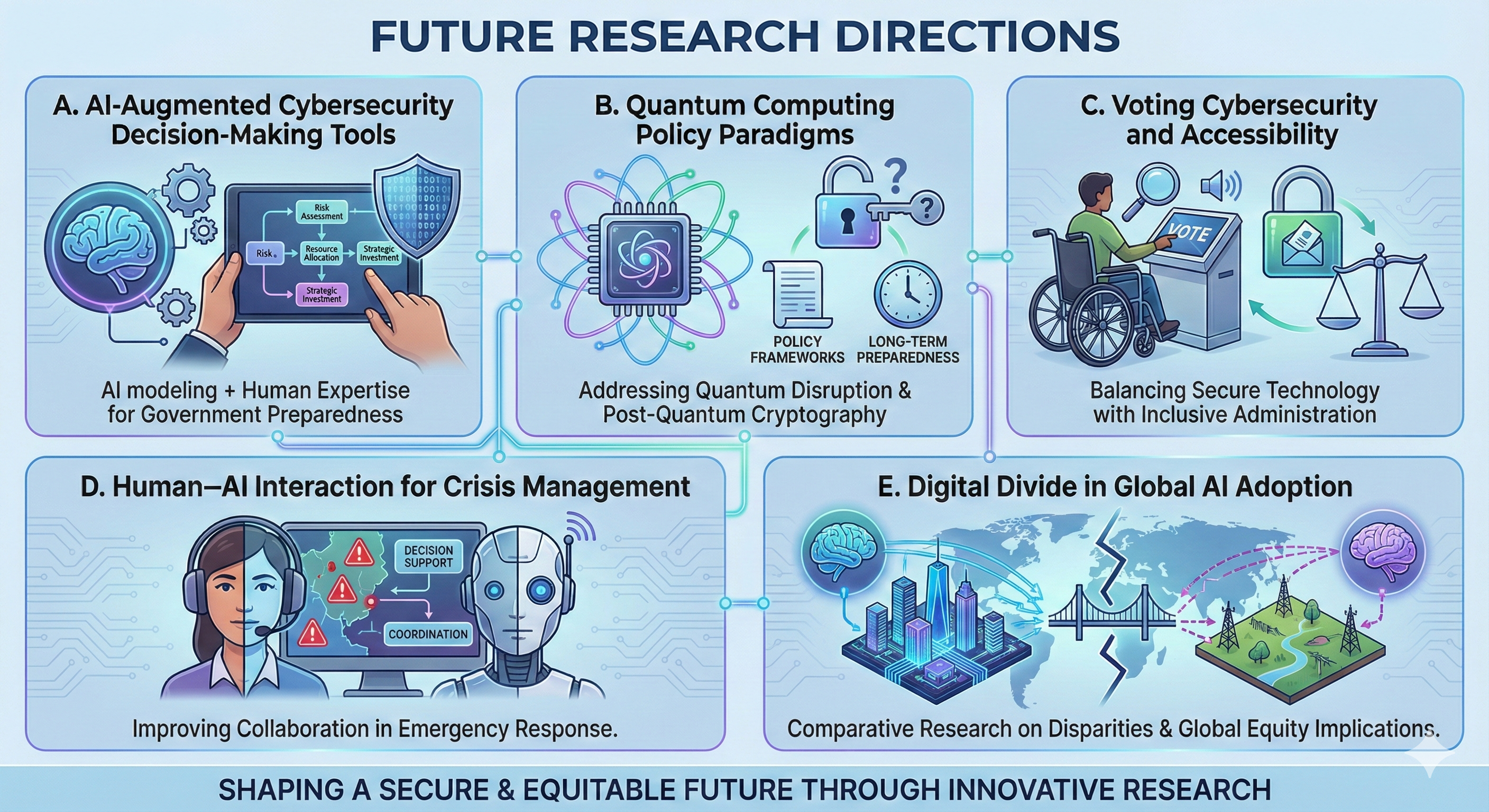
A. AI-Augmented Cybersecurity Decision-Making Tools
Development of advanced analytical tools that integrate AI modeling with human expertise to support comprehensive cybersecurity preparedness assessments and strategic investment decisions for governments.
B. Quantum Computing Policy Paradigms
Examination of emerging cybersecurity policy frameworks that address quantum computing’s disruptive potential, with a focus on post-quantum cryptography and long-term institutional preparedness.
C. Voting Cybersecurity and Accessibility
Exploration of technological, political, and legal challenges in balancing secure election technologies with improved accessibility for voters with disabilities, including best-practice recommendations for inclusive election administration.
D. Human–AI Interaction for Crisis Management
Analysis of evidence-based strategies to improve human–AI collaboration in emergency and disaster management, focusing on communication, decision-support tools, and coordination effectiveness.
E. Digital Divide in Global AI Adoption
Comparative research examining disparities in AI technology adoption between developed and developing countries, with attention to infrastructure, governance, socioeconomic barriers, and implications for global equity.